TOMFAW

Trusting Our Maker, Finding A Way

Sarah's Story

A journey through love bombing, faith, betrayal, emotional whiplash, and healing.

Discovering the Love is Conditional

A Gift or A Chain

Sarah remembers the early days of her relationship with Robert as open and safe. Their conversations felt honest and vulnerable — the kind where weaknesses could be shared without fear. She believed that this rare openness could be the foundation they would build on.

But the relationship began to shift. The slow climb turned into a roller coaster that never stopped until one of them finally said, enough is enough.

One day, Robert sent a message that stopped her in her tracks:

“It’s okay, Sarah. I don’t know why you did it, but I forgive you.”

Sarah had no idea what he meant. The day before, they had shared an amazing day together. While she was reminiscing about that, Robert was believing she was a thief.

When she pressed for clarity, he finally told her he believed she had stolen from him — more than once — a few hundred dollars from a spare money bucket in his home. He said he didn’t know why she would do it, but maybe, he suggested, it was because she was a desperate single mother. Later, he would deny saying that altogether, but Sarah couldn’t forget the words. They cut deep.

From her perspective, the accusation came out of nowhere. She had seen Robert lose his wallet multiple times, calling credit card companies to replace cards — sometimes on days she wasn’t even with him. The claim didn’t match reality. Still, in his mind, the verdict seemed already decided. To Sarah, it felt like an excuse — a reason to spend time with a woman he had been talking to before they met. He even told her he did so because she “wasn’t able to be honest” about stealing and “wasn’t serious about the relationship.”

Sarah brought the incidents up here and there, especially when fresh judgment or condemnation was projected onto her. She wanted clarity. She wanted to be believed. But even after many counseling sessions focused on this very topic, he refused to reconsider.

After years on the roller coaster, Sarah grew more and more tired and less willing to accept the unacceptable.

Over the smallest things, Robert would belittle her. One example came when she opened a new pack of cheese, unaware that three slices of three-month-old cheese were sitting in the back of the fridge. For something like this — and there were many such examples — he claimed she didn’t deserve love, comfort, or safety. In his view, it meant she didn’t respect his belongings and didn’t care about the money he spent.

It was the kind of overreaction that shifts a mistake from the ordinary into a moral failure — reframing a simple oversight as proof of unworthiness. Over time, this pattern chips away at a person’s sense of self, creating an environment where love feels conditional and safety depends on perfect performance.

Even so, Robert and Sarah tried to work things out. But when it became clear that the very behaviors Robert claimed to hate were still happening — without remorse or accountability — Sarah finally walked away. She broke it off, stopped responding to most messages, and she became thankful when Robert moved and the random run-ins around town eventually ceasedFor a long while, Robert kept reaching out.

His texts were sweet and kind, while also lamenting how little Sarah was willing to work things out — something he said he wanted. He even attempted to send Sarah money. This hurt her. She didn’t understand the motive but sensed it wasn’t genuine or from a kind place. From Sarah’s point of view, the transfers felt more like a reminder of the imbalance — a subtle form of control. She returned the money every time, feeling it was less a kind gesture and more a symbol of power, carrying the unspoken message:

I have more. I am blessed. I can give to you — even to the one I believe wronged me.
tom faw blog Discovering the Love was Conditional

Public Persona vs. Private Reality

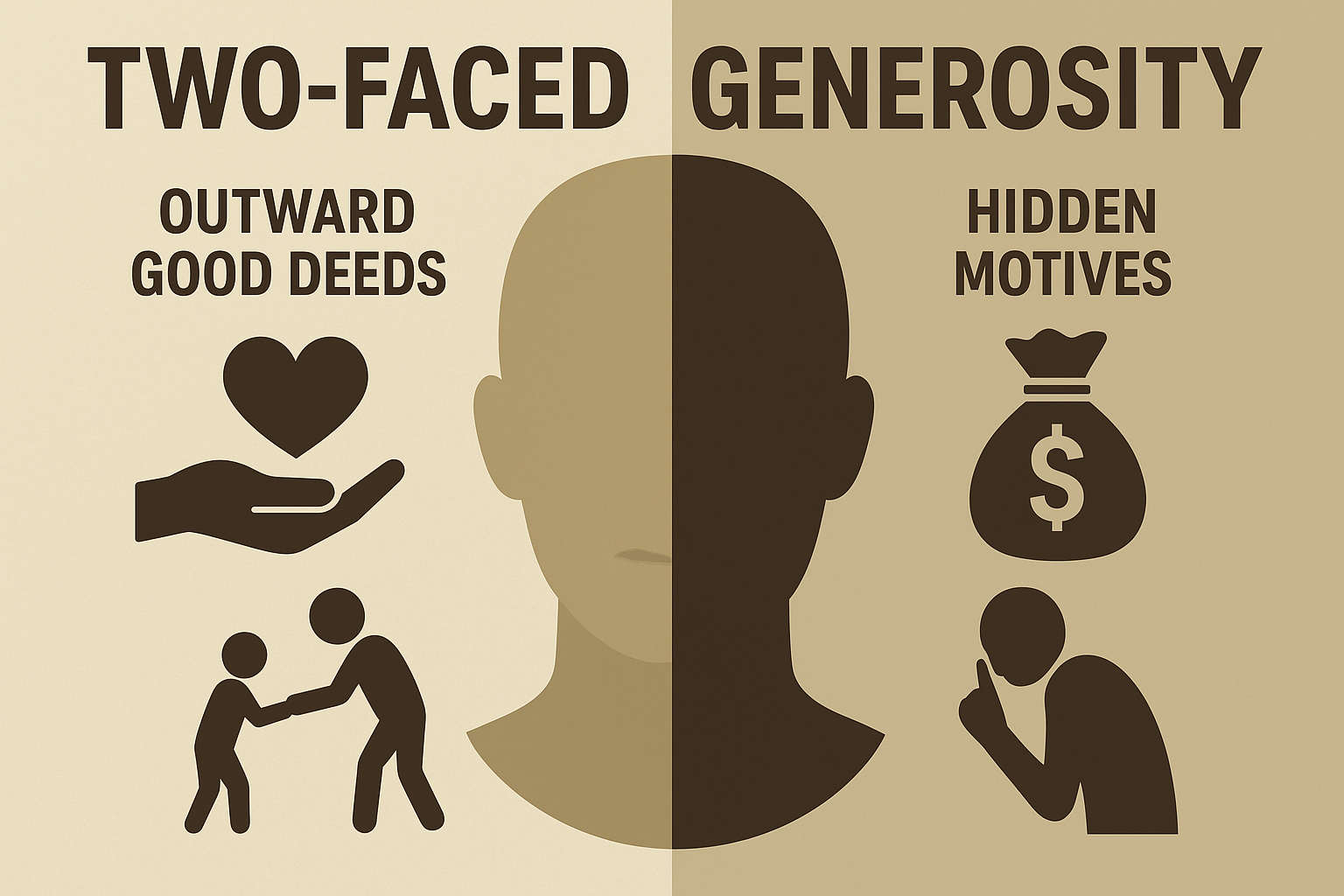
Sarah observed two different sides to Robert. Publicly, he was known for being optimistic, happy, and godly. He appeared to live a “cool” and enviable life, with the freedom to shape his days as he pleased. Sarah believed that life without order eventually becomes chaos — that too much of anything, even freedom, can drift out of balance and lead to deeper testing. To others, Robert seemed warm and generous, someone who listened attentively and spoke as though he were grounded, mature, and sound in his faith. He was socially admired and well regarded.

Privately, Sarah’s experience was very different. It included moments of criticism, walking on eggshells, incidents she believed pointed to infidelity, and recurring patterns that did not align with the image he presented publicly. She recalled moments when he would engage warmly with others while simultaneously offering her a look of silent disapproval — subtle, but cutting — leaving her feeling small, confused, and out of step with the version of him others seemed to know.

After the relationship ended, Sarah watched Robert continue moving through life with apparent ease, sharing glimpses of beauty, spiritual experiences, and a life that appeared free and fulfilled. To the outside world, it looked like blessing, favor, and forward momentum. But Sarah had lived close enough to understand that outward movement and spiritual language do not always reflect inner wholeness. Just as Jesus warns, charm, generosity, and religious talk can exist without humility, accountability, or truth taking root in the heart.

From Sarah’s perspective, this kind of life can become a stage for a curated self — the part of a person that thrives on admiration while carefully controlling what others see. When life is lived largely in motion, it can be easier to outrun uncomfortable truths and sidestep the kind of accountability that close relationships naturally bring. The charm remains intact, the generosity is visible, and the spiritual language flows freely — yet the deeper self, with its wounds and contradictions, can remain hidden. For those on the inside, this dissonance between public image and private reality slowly erodes trust, leaving the truth obscured behind a polished facade.

Read more: Discovering the Love is Conditional

The Hard Truths Behind the Mask of Success

Sarah admits it was painful to watch Robert’s life flourish while hers grew more challenging after their split.  Sarah got into a car accident and almost lost the small business she created to the flooding of the hurricanes. The ache wasn’t just about lost love or broken trust — it was the unsettling reality that someone who had caused so much harm could appear to prosper.

She found herself wrestling with the ancient questions voiced in Psalm 73: “Why do the wicked prosper? Why do all the evildoers flourish?” This isn’t just a question of circumstance; it cuts to the heart of faith and justice. Sarah’s pain echoed the psalmist’s struggle — a disorienting tension between what seems visible and what is true in God’s eyes.

The Bible is clear that wealth, comfort, and outward success are never reliable signs of God’s favor. They do not guarantee a pure heart or a life aligned with God’s justice. Rather, God’s patience toward hidden sin is a space — painful though it may be — that offers opportunity for repentance and transformation.

From Sarah’s perspective, this was a season of profound wrestling. She had to confront the tension between human brokenness and divine justice, between appearances and reality. The flourishing life Robert displayed was, in many ways, a mask — a carefully maintained exterior that hid deeper wounds and ongoing brokenness.

In that tension, Sarah began to understand that her own healing would not come from seeing Robert falter, but from reclaiming her story, finding freedom beyond the shadow of his facade, and trusting in a God whose justice is ultimately sure, even when human eyes cannot see it clearly.

If you’d like to be notified when new reflections are shared, you’re welcome to leave your email here.

Subscription Form

T.O.M. F.A.W. – Trusting Our Maker Finding the Way

The Seasons of Silence: What God Does When You Can’t Hear Him


When Heaven Feels Quiet

There are seasons when you kneel to pray and feel nothing.
When worship songs feel hollow, Scripture reads flat, and the once-loud presence of God becomes faint — like a voice fading through fog.

It can be terrifying.
You wonder if you’ve done something wrong. If you’ve missed Him. If you’re being punished.

But the silence of God isn’t rejection — it’s invitation.
Silence can be the sacred soil where deeper faith begins to grow.


The Purpose of the Quiet Season

Spiritual silence isn’t a void — it’s a classroom.
When God stops speaking in the ways you’re used to, He’s often teaching you to recognize His voice in new ways.

  • In stillness instead of signs.
  • In trust instead of proof.
  • In peace instead of performance.

Silence teaches you to walk by faith rather than by constant reassurance. It’s how God matures love — shifting it from dependency to devotion.


When God Seems Hidden

There are biblical patterns for divine silence.

  • Job heard nothing for a long stretch of pain — yet God was watching every moment.
  • David cried, “Why do You hide Your face from me?” yet still wrote psalms of praise.
  • Jesus Himself experienced silence in Gethsemane — not because the Father was gone, but because redemption was near.

Silence doesn’t signal God’s absence — it often signals His nearness in unseen form.


What God Is Doing in the Quiet

  1. Deepening Your Roots
    When the surface dries, the soul learns to dig deeper. Faith grows downward before it grows upward.
  2. Detoxing Your Dependence
    Sometimes, we depend more on emotion than truth. Silence detoxes emotional addiction so that faith can stand on its own.
  3. Revealing False Voices
    Without the noise of affirmation, you begin to discern which voices in your life were never His.
  4. Rebuilding Intimacy Through Stillness
    The quiet season can feel like a drought, but in hindsight, you’ll see it was where real intimacy began — not through words, but presence.

What To Do When God Feels Silent

  1. Stay Present Anyway
    Don’t stop showing up. Stillness itself becomes a prayer.
  2. Speak Honestly
    God doesn’t need polished faith. Tell Him the truth: “I miss You. I don’t understand.” Authenticity keeps the connection alive.
  3. Return to Simplicity
    Light a candle, go for a walk, read one verse — simplicity often reopens the space where the Spirit speaks.
  4. Remember What He Already Said
    In silence, revisit what He’s already spoken. The last word from God is still truth until He gives the next one.

The Gift Hidden in the Waiting

Silence purifies motives. It reveals whether we seek the feeling of God or the faithfulness of God.

Like winter resting the soil, spiritual silence prepares us for the spring of revelation.
You may not sense movement, but something is growing beneath what you can’t see.

Faith that survives silence becomes unshakable.
Love that lasts through silence becomes eternal.


A Closing Reflection

If you’re in a silent season, don’t rush out of it.
Ask instead: What is God forming in me here that noise would only distract me from?

He is not ignoring you.
He is speaking — but in a frequency reserved for those willing to wait.

The stillness you fear may be the very sound of His hands rebuilding your heart.


🌿 Reflection Practice

Take five minutes and write about a season when God felt silent.

“What did that silence eventually reveal about me, and about Him?”

Often, you’ll see that what felt like distance was actually divine design.

Desiring God – The Power of Story in Spiritual Growth

GotQuestions.org – What Does It Mean That Jesus Taught in Parables?

Psychology Today – How Metaphor Heals Emotional Pain

Conversation Analyzed

What follows is a genuine exchange, preserved as it happened—only minor typos corrected. Brief, trauma-aware reflections after each section have been added to help you notice subtle dynamics: when reassurance becomes control, when spirituality masks avoidance, when projection blurs truth, and where self-differentiation breaks through. Read slowly, and listen to your own body as you go.

Opening Exchange

Robert:
I’m sorry for everything and I feel sad. I just wish you believed in me instead of doubting me all the time. It’s such a lonely place. I’m sorry for saying mean things yesterday out of frustration and anger.

Behavioral Note: This begins with what looks like remorse, but the underlying message centers on *being misunderstood* rather than taking full responsibility. The emotional tone shifts quickly into self-victimization — a subtle deflection from the harm done.

Robert:
But you don’t believe me.

Behavioral Note: The repeated plea for belief shifts pressure back onto Sarah. This tactic can unconsciously coerce the listener to silence their discomfort in favor of easing the speaker’s emotional distress — a common pattern in emotional confusion cycles.

Sarah:
Maybe you never cheated, but so much evidence points to it. You choose to keep hiding and making things more hidden. Your actions show you’re not ready for a true committed relationship.

Behavioral Note: Sarah leads with uncertainty — not accusation. She is naming patterns of secrecy and inconsistency, which are common signs of relational trauma responses. Her statement is emotionally grounded and rooted in observable behavior, not blame.

Sarah: Naming the Secrecy

Blocking me.
Deleting everything.
Making everything private.

Nah, bruh — if there isn’t betrayal, there’s no need to go to these lengths. Gotta be real about what’s going on.

Behavioral Note: Sarah directly calls out secrecy. Her language is strong, but grounded. She is asking for honesty, not control.

Sarah: Modeling Respect

I haven’t betrayed you. I’m respectful. I can kindly tell someone to back off if needed.
I don’t see myself as flirtatious — I see myself as respectable.
I’m open. I’ve shown you everything you’ve ever asked for to give you peace of mind.

Behavioral Note: Sarah models what transparency and mutual respect look like. She’s not overexplaining — she’s affirming her boundaries.

Robert: Defensive Reversal

Robert: Just stop it. I’m sick of always being someone who is unfaithful in your mind.


Sarah: I expect the same trust — and if it can’t be given, I can’t stay.


Robert: That just shows how unfaithful your own heart is.


Behavioral Note: Textbook defensive reversal and projection. Robert reframes Sarah’s request for mutual trust as evidence of her unfaithfulness, flipping concern into accusation. The “if it can’t be given, I can’t stay” line becomes an ultimatum that pressures compliance rather than building safety—an emotional control move that moralizes her boundary as wrongdoing.

Sarah: Detailing the Pattern

I don’t know how far it goes. I just know great lengths are being taken to hide things.
I see what you block. I see what you search.
These are all reasons to be transparent.

You’ve taken every opposite step — and when I bring it up, I’m just “Miss Snoopy.”
I don’t want to place my feelings in a relationship full of secrecy.

Behavioral Note: This is relational hypervigilance, not paranoia. Sarah’s alertness is a reaction to repeated confusion and gaslighting. She’s trying to ground the conversation in observable facts.

Sarah: Facts, Not Accusations

You made another Messenger account. Blocked me on Facebook. Erased everything.
Still had a few girls in there.

Whatever is going on — I don’t claim to know.
But I can’t live like this.

Behavioral Note: Sarah refuses to speculate, which shows restraint. She chooses to name what’s real and protect her emotional well‑being.

Sarah: Drawing the Line

You are the one doing shady stuff. Constant blame!
Look at the screenshots, bruh.
That is undeniably shady.
The blocking, the erasing, the hiding of notifications — shady. Own it.

If it wasn’t you — if this was someone else — you’d be in a frenzy about how shady it is.

Behavioral Note: Sarah offers a reality check. She asks Robert to imagine his behavior from the outside. This is an invitation to accountability.

Robert: Using Scripture to Redirect

Take out your own plank.

Behavioral Note: Robert uses scripture to imply that Sarah is being judgmental — a reversal of accountability. This form of redirection is classic in spiritualized manipulation.

Sarah: Rejecting Gaslighting

My crazy isn’t your crazy — don’t project that on me.
Facts are facts — whether acknowledged or not.

Behavioral Note: Sarah refuses to be labeled as unstable. She draws a line between her emotions and his projections. This is emotional clarity and self-differentiation under pressure.

Sarah: Reaffirming Transparency

You’ve always been welcome to ride with me for work or anything. I have nothing to hide.
I have no relationships to hide.

Behavioral Note: Again, Sarah invites transparency. She’s modeling trust, not demanding it. This counters the accusation narrative with lived openness.

Robert: Unfounded Accusations

I know you have multiple relationships with multiple men.

Behavioral Note: Baseless accusation meant to discredit and confuse. This is textbook projection — destabilizing the clarity Sarah is fighting for.

Robert: Quoting 1 Corinthians 13

Love is patient, kind, not jealous… keeps no record of wrongs.

Behavioral Note: While this scripture is beautiful, quoting it in the middle of conflict reframes Sarah’s concerns as unloving. This is a classic example of spiritual bypassing — using godly language to avoid accountability.

Sarah: Concluding with Facts

Betrayal has happened — and the level of secrecy you’re choosing speaks volumes.

Behavioral Note: Sarah draws a clear conclusion from behavior, not emotion. She affirms her right to name what she’s experiencing and refuses to gaslight herself.

Sarah: Echoing Her Hope

God sent you an angel — someone gracious who’s been around a lot.
I’ve watched counseling, family ups and downs. I understand what’s loving and Godly.
Like Leslie told us, I’m kinda the perfect person for this kind of thing.

Behavioral Note: While this might sound like a rescuing posture, it’s actually a layered reflection. Sarah references past counseling, her attachment history, and a lyric Robert once wrote about Sarah, the meaning of her name “gracious.” This is the voice of someone who once believed her empathy could save the relationship — a common pattern in trauma-informed dynamics.

Sarah: Encouraging Spiritual Growth

Maybe you’re supposed to trust the process the Lord has for you.
It’s not always easy, but once the pruning begins, it gets easier.

Behavioral Note: Sarah ends with hope, but it’s a complicated kind — the kind that spiritualizes dysfunction to survive it. She offers kindness, but is also letting go.

Robert: Quoting John 9:18–34

Though I was blind, now I see…

Behavioral Note: Robert compares himself to the man healed by Jesus who was doubted by others. It reinforces his “persecuted prophet” identity — subtly implying that Sarah is like the disbelieving crowd. Another example of scripture used to claim spiritual vindication.

Reflections

This dialogue between Sarah and Robert reflects real patterns seen in emotionally confusing and spiritually manipulative relationships. We share this not to expose, but to help others name what they’ve lived through.

If you’ve found yourself wrestling between your gut and someone else’s words — between intuition and spiritual confusion — you’re not alone. Disentangling manipulation from love can be one of the hardest and holiest things you ever do.

Disclaimer: “Names and identifying details have been changed to protect privacy. Any similarity to actual persons, living or dead, is purely coincidental.”

TOMFAW.com — Trusting Our Maker Finding A Way.


Further Reading:


When a Person uses Scripture to Hurt

A Personal Testimony of Spiritual Confusion, Abuse, and Grace

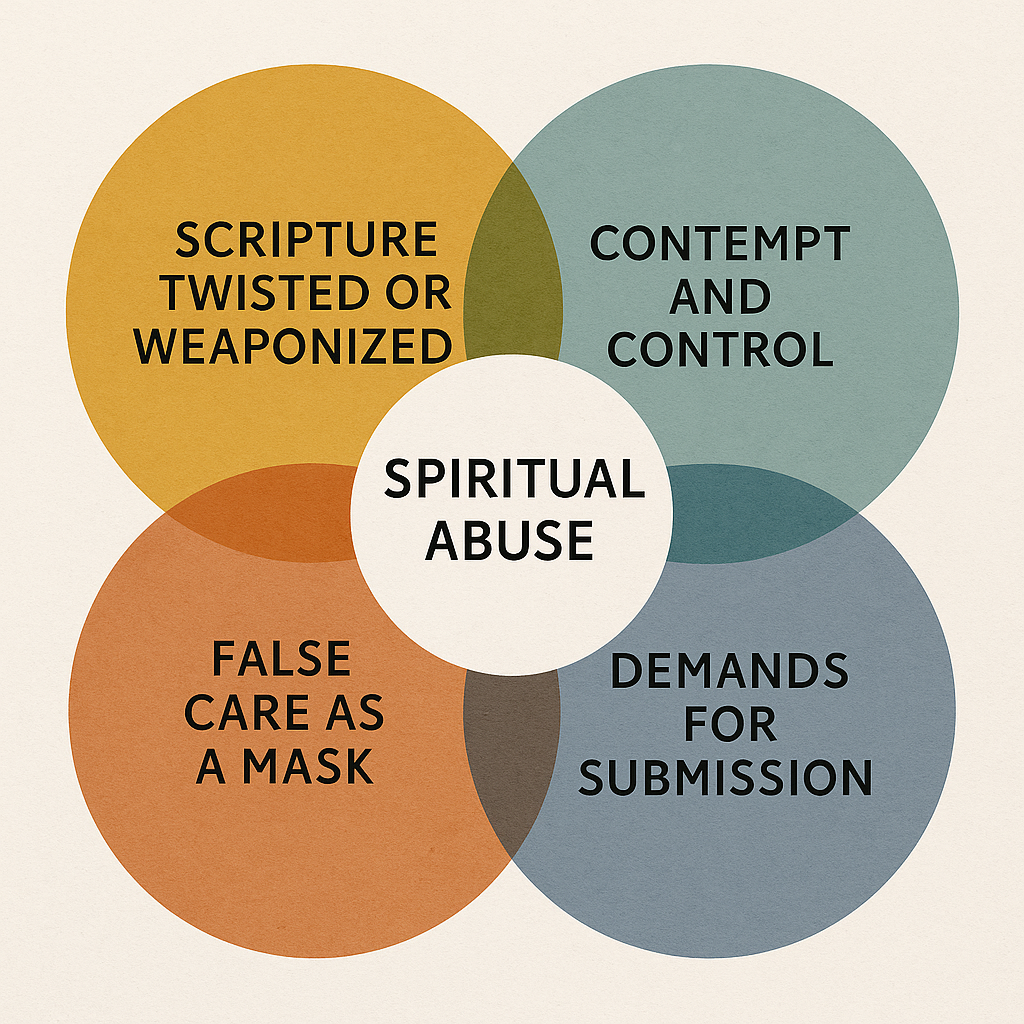
Spiritual Abuse Diagram

This testimony reflects one woman’s lived experience, perceptions, and spiritual understanding of events as she experienced them. It is shared to bear witness, not to accuse, and represents her personal truth.

There is a particular kind of disorientation that comes when language meant to give life is experienced as something that wounds instead. When Scripture that once felt comforting becomes a source of fear and confusion. When the name of Jesus is spoken often — and yet, the impact on the soul feels crushing rather than healing.

This is how spiritual abuse unfolded in Sarah’s life, as she experienced it.

When God’s Words Get Twisted

Sarah was in the relationship for five years. Five years of believing, praying, waiting, and hoping that the man she loved — Robert — whose words about God were passionate and articulate, would eventually live in alignment with what he preached.

From Sarah’s perspective, Robert quoted Scripture fluently and often spoke about God’s love, demons, and deliverance with a confidence that suggested special insight. At times, he described Sarah as a gift, a partner, a best friend — even an angel sent to open his eyes. He once wove those words into a song he shared privately with her.

Over time, that language shifted.

Sarah experienced herself being redefined — no longer as a gift, but as a problem. She recalls being described as deceptive, untrustworthy, seductive, even spiritually dangerous. At one point, Robert attempted to cast what he described as a “spirit of seduction” out of her.

At the same time, Sarah discovered information that deeply disturbed her. In her understanding, she found evidence suggesting he was seeking sexual services at massage establishments, searching explicit terms online, and engaging in hidden conversations with other women — while accusing her of infidelity.

Sarah was not passive in this process. She recalls finding messages, search histories, and eventually encountering him at a massage establishment. To her, these discoveries formed a consistent pattern that contradicted what she was being told.

Still, she stayed — not because she felt weak, but because the truth was often wrapped in charm, spiritual language, and hope. She believed in growth, grace, and accountability. She also recognized that she had her own areas of growth. Eventually, she came to see that her repeated willingness to return was itself part of the cycle.

What made it especially confusing was that at times, Robert appeared to want healing. He prayed. He spoke about change. He attended counseling sessions with her. His words about God often sounded sincere. Somewhere in the process, Sarah realized she had begun to lose clarity about where God’s voice ended and his began.

The Hope That Kept Her There

As Sarah began creating distance, she noticed changes within herself. Her awareness sharpened. She began to believe that what she was experiencing was not only emotional, but spiritual.

During one separation, she recalls seeing what appeared to her as a dark silhouette in her hallway late at night. She dismissed it, laughed at herself, and assumed it was stress or imagination.

She returned to the relationship.

Months later, after another period of separation, she experienced something similar again — this time on a pier, sensing a dark presence behind her. Once again, charm and confusion followed. Robert told her she was all he needed. He emphasized closeness, even sharing another song he had written.

When apologies came, they often felt vague to her — expressions of regret without naming specific harm. Without clarity or repair, the cycle resumed. Eventually, Sarah reached a point where she felt she could no longer continue. She left, believing it was final.

Her body, however, carried the weight. She experienced intense physical symptoms — difficulty breathing while lying down, chest pain radiating down her arm, and eventually a panic attack so severe she believed she might be dying. Unable to move or call for help, she prayed, focusing on her son’s safety.

Using grounding techniques a friend had once shared, she slowly returned to the present moment.

That night, as she slept, Sarah experienced what she understood as another spiritual encounter — a smoky presence, a sense of threat, and intense fear. She woke herself up, prayed, and eventually fell asleep again.

Looking back, Sarah believes that spiritually confusing and abusive relationships can leave people vulnerable — especially when Scripture is used to distort reality and intimacy is mixed with fear. In her understanding, darkness often imitates light.

Sleep Paralysis — and the Light That Saved Her

The next day, exhausted, Sarah laid down to rest, sensing something would happen again.

She experienced what she recognized as sleep paralysis — something she had encountered once in her early twenties after experimenting briefly with lucid dreaming. This episode felt more intense. She perceived darkness, overwhelming noise, physical paralysis, and fear. She could not tell whether she was dreaming or awake.

Then, instead of fighting, she cried out to Jesus.

In her experience, everything changed instantly. She perceived an overwhelming burst of light. The presence she felt was gone. She woke feeling lighter than she had in years.

For Sarah, this was not symbolic. It was real. Jesus saved her.

Wanting to Share — and the Final Break

Sarah remained intermittently in contact with Robert and felt a desire to share what had happened — the freedom she experienced, the encounter with Jesus, and the hope that healing was possible.

At the same time, she observed that while she was struggling with anxiety and recovery, Robert was publicly active — performing gospel music, praying over strangers, sharing stories of spiritual impact. When he spoke to her, he spoke about these things enthusiastically, but did not ask how she was or acknowledge what had happened between them.

When she tried to share her experience, she felt dismissed. The conversation returned to him — his gifts, his calling, his connection to God. The disconnect felt painful and clarifying.

Soon after, Sarah noticed familiar signs that prompted her to look again. She found more evidence consistent with what she had seen before. For her, this confirmed the pattern. She made a commitment to herself and to God not to return.

Calling It What It Is

Spiritual abuse is difficult to name because it often wears the appearance of holiness. As Chuck DeGroat writes:

“Abuse is not just harm — it’s the violation of vulnerability under the guise of care.”

Sarah understands now that she was vulnerable — emotionally and spiritually open. What felt like care was, in her experience, mixed with control, blame, and fear.

She was blamed for the relationship’s problems. For being unforgiving. For noticing patterns. For trusting her instincts. Even as she grew stronger, she felt destabilized.

This was not simply a difficult relationship.
This was not a misunderstanding.

For Sarah, this was spiritual abuse.

How She Is Healing

Sarah is no longer in the relationship. Healing now looks like:

  • Naming the abuse without minimizing it
  • Separating God from the person who used His name
  • Trusting Jesus directly, without fear or control
  • Remembering who she is
  • Releasing the fantasy that love or endurance could save someone unwilling to change
  • Receiving community that does not use Scripture to dominate

She knows now:
The Spirit is not found in fear, shame, yelling, or condemnation.
The Spirit brings clarity, safety, and truth.

“Come to me, all who are weary and burdened, and I will give you rest.” — Matthew 11:28

That rest is what Sarah is walking toward now.

Postscript

To those still in it:
You are not crazy. You are not rebellious. You are waking up.

And to those who have made it out:
We carry each other forward — gently, honestly, without shame.

Just truth.
Just healing.
Just Jesus.

TOMFAW – Trusting Our Maker Finding A Way

Links to Related Scripture:

  1. Matthew 11:28 – Rest for the Weary
    https://www.biblegateway.com/passage/?search=Matthew+11%3A28&version=NIV
  2. Proverbs 3:5-6 – Trust in the Lord
    https://www.biblegateway.com/passage/?search=Proverbs+3%3A5-6&version=NIV
  3. Romans 8:28 – God Works for Good
    https://www.biblegateway.com/passage/?search=Romans+8%3A28&version=NIV
  4. Psalm 73 – The Prosperity of the Wicked
    https://www.biblegateway.com/passage/?search=Psalm+73&version=NIV
  5. 1 Peter 5:7 – Cast Your Anxiety on Him
    https://www.biblegateway.com/passage/?search=1+Peter+5%3A7&version=NIV

When the One Who Praises Wounds You

Some betrayals feel especially disorienting—not because of what was done, but because of who did it. Spiritual abuse in the church carries a unique kind of confusion, one that can take a long time to untangle and heal from.

He prayed.
He prophesied.
He quoted Scripture with ease.
He moved comfortably in spaces where worship, music, and spiritual language shaped how people were seen and trusted. He was often referred to as a man of God.

He spoke the name “Jesus” fluently.
He framed his struggles as normal. “Men’s battles,” he said.
He became fixated on the smallest perceived offenses—tiny things, trivial moments—turning them into opportunities for shame or accusation.
And when he hurt her, he reminded her of the call to forgive—seventy times seven, he’d repeat.

At one point, he even wrote her a worship song.

It felt sacred. Intimate. Like a spiritual bond blessed by God Himself. It deepened her trust and tethered her heart, making the relationship feel chosen, protected, and meaningful. What she couldn’t yet see was how that same spiritual intimacy would later be used to blur boundaries, silence her pain, and reframe harm as holiness.

It left her questioning not only him, but herself.
Was she unforgiving?
Judgmental?
Overreacting?

But deep down, her body knew.
Her spirit knew.
Something was wrong.

When spiritual language is used to justify harm, it becomes spiritual abuse.
And when someone performs holiness while living in unrepentant contradiction, the resulting confusion can fracture a person’s faith.

In churches and ministries, we often confuse gifts with goodness.
But Scripture is clear:

“By their fruit you will recognize them.” (Matthew 7:16)

Not by their songs.
Not by their stage presence.
Not even by the crowds they draw.
By their fruit.

But what is fruit, really?
That’s where things get complicated.

Because on the surface, the fruit can look good.

This man—he served others.
He spoke about grace and redemption.
He gave generously.
He expressed faith through music and worship.
He showed warmth, affection, and spiritual enthusiasm that drew people in.

From the outside, these are the signs many are taught to trust.

But the fruit Jesus speaks of in Matthew 7 is not limited to public action—it is integrity of heart. It’s revealed in the whole life: private choices, relational patterns, and the posture of repentance.

Sometimes the only fruit Jesus can truly see are the ones behind closed doors.

It’s not only what someone does, but how consistently, how truthfully, and how humbly they live it.

Because even good works can become tools of self-elevation.
Even charity can be performative.
Even worship can be used to build spiritual authority without accountability.
Even kindness can be conditional.

And the Spirit doesn’t measure fruit by momentary acts—but by sustained transformation.

This is where discernment begins.
Not in suspicion, but in truth-telling.

A person can lead worship and still lead a double life.
They can speak about grace while avoiding accountability.
They can move a crowd—and manipulate the people closest to them.

That dissonance is enough to unravel someone’s trust.
Not just in the individual, but in the systems that celebrate them.
In the churches that platform them.
In the people who say, “But he’s so kind,” or “God is clearly using him.”

She begins to ask:
If God uses someone, does that mean God approves of their behavior?
If a person leads others spiritually but refuses to be led themselves, what is actually happening?

There’s no easy answer.
But here’s what she’s learning:

God may work through anyone.
But that does not mean God blesses harm.
He may bring good out of brokenness—but never by excusing abuse or silencing truth.

In some expressions of modern worship culture—especially those built around image, gifting, and performance—it can be difficult to tell the difference between spiritual influence and spiritual manipulation.

The stage may shine.
The lyrics may resonate.
The crowd may sway in unison to the next moving worship song.

But the question still lingers:
What kind of life is being lived offstage?

This is how spiritual gaslighting works:
The harm-doer remains the holy one.
The truth-teller becomes the problem.

So she stops speaking.
She doubts her instincts.
Eventually, she begins to question everything—church, worship, Scripture, leaders.

She is not walking away from God.
She is walking away from confusion.

Healing, for her, begins with naming what happened.
Not loudly.
Not with revenge.
Just honestly.

She’s beginning to believe that God is not the one who manipulated her.
God is not the one who blamed, condemned, or shamed her.
God is not the one who used worship as a cover for harm.

God was with her the whole time—grieved, not glorified.

She still wrestles with faith, forgiveness, and the church.
But now she knows:

Real grace tells the truth.
Real forgiveness does not require silence.
Real transformation bears fruit.

Not perfection.
But humility.
Not charm.
But character.

So she lets herself grieve.
She stops calling chaos “God’s will.”
She begins to trust the Holy Spirit within her again.

And maybe that’s where God meets her.
Not in the performance.
But in the quiet place where she finally allows herself to say:

“This is not right.”

And when she needs to remember it again, she returns to the truth:

“Trust in the Lord with all your heart and lean not on your own understanding.
In all your ways acknowledge Him, and He will make your paths straight.”
(Proverbs 3:5–6)

Because even when the road feels confusing, she can trust that God’s will is better than the illusion of control.

T.O.M. F.A.W.Trusting Our Maker, Finding A Way

  1. Faith-Based Inspiration Bible Gateway
    (A trusted source for scripture references and spiritual reflection.)
  2. Mental Health & HealingNAMI (National Alliance on Mental Illness)
    (Authoritative resource on emotional healing and mental well-being, aligns with your “finding a way” theme.)
  3. Personal Growth & ReflectionGreater Good Science Center – UC Berkeley
    (Research-based insights on resilience, hope, and human connection.)