TOMFAW

Trusting Our Maker, Finding A Way

Sarah's Story

A journey through love bombing, faith, betrayal, emotional whiplash, and healing.

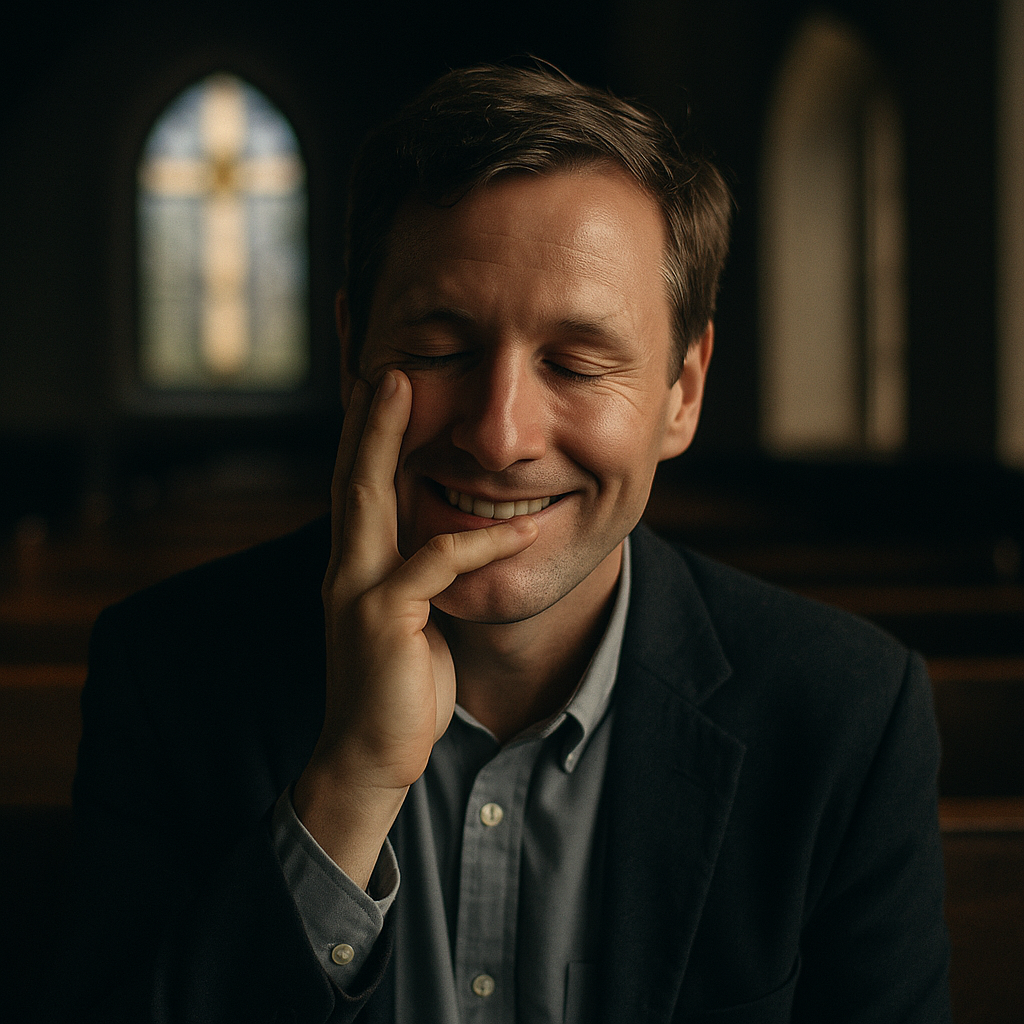
The Private Hell Behind the Holy Smile

There are few prisons quieter than the one built inside a person who looks holy on the outside but is dying inside.
The worship leader who never misses a Sunday.
The mother who posts verses every morning.
The man who speaks of grace but cannot feel it anymore.

They smile, lift their hands, and nod at all the right moments — yet beneath the surface, something groans.


The Hidden Weight of Appearances

For many, the act of looking righteous becomes a survival mechanism.
It’s easier to polish the surface than to face the shadows beneath it.
The more fragmented the soul becomes, the brighter the performance must be.

Jesus once said to the Pharisees:

“You are like whitewashed tombs, which look beautiful on the outside but on the inside are full of bones and everything unclean.” — Matthew 23:27

That verse isn’t meant to shame; it’s meant to reveal compassion.
Christ saw their exhaustion — the endless scrubbing of a mask that never satisfied.


How the Soul Begins to Fracture

Hidden sin or spiritual deception rarely begins loud.
It starts as a whisper: You’re fine. Everyone struggles. Keep serving. Keep smiling.
Over time, that whisper becomes a wall.

When confession is silenced, the body begins to carry what the heart cannot speak.
Insomnia. Irritability. Anxiety that feels holy because it hides behind perfectionism.
A restless ache that no amount of service or success can quiet.

David wrote in Psalm 32:3–4,

“When I kept silent, my bones wasted away through my groaning all day long.”

Unspoken truth always finds another way to speak — through fatigue, conflict, or despair.


Why We Hide

  1. Shame — We fear exposure more than death.
  2. Pride — We believe our image is what keeps God’s favor intact.
  3. Fear of Rejection — We have confused the love of people with the love of God.

So we polish the image. We post the verse. We lead the small group.
We say, “I’m fine, just tired.”

But secretly, we wonder if God even knows us anymore — or if He only loves the version we perform.


The Double Life of Spiritual Suffering

Many who live in hidden torment are not evil; they are simply exhausted.
They’ve built a faith on doing rather than being.
They’ve confused conviction with condemnation, discipline with shame, and God’s patience with His absence.

In churches, these souls are often the hardest to spot.
They serve tirelessly, pray eloquently, and counsel others — all while slowly fading inside.

But the fruit betrays the roots.
You see it in the irritability that follows worship,
in the criticism hidden behind “concern,”
in the need to control every conversation, every perception, every ounce of approval.

This is not joy — it’s bondage wrapped in ministry.


God’s Kindness in Exposure

When God exposes what’s hidden, it feels cruel at first — like a spotlight on shame.
But exposure is mercy.
It is surgery for the soul.

The same fire that reveals also refines.

When David was finally confronted by Nathan, he collapsed into repentance, crying,

“Let the bones You have crushed rejoice.” — Psalm 51:8

Repentance was not punishment; it was oxygen.
The pain of being found became the first breath of freedom.


The Private Hell vs. the Hidden Heaven

There are two invisible worlds inside every believer:

  • The Private Hell: where guilt, secrecy, and pride reign — the soul separated from peace.
  • The Hidden Heaven: where humility cracks the surface and light enters.

The transition between them often looks like collapse — loss of reputation, the end of pretending, the breaking of control.
But that collapse is sacred.
It’s the unmaking that precedes resurrection.


The Cost of Continuing the Act

To maintain the holy smile while the heart is rotting is to live in quiet torment.
It’s the slow death of authenticity.
Each lie told to oneself adds another layer of distance from grace.

Eventually, the smile becomes heavy.
It takes more effort to maintain than to repent.

This is how spiritual suffering deepens — not through God’s wrath, but through resistance to mercy.


The Invitation to Come Clean

When confession finally happens — when the words we fear most finally leave our mouths — something miraculous occurs:
shame loses its language.

The enemy’s power is in secrecy, not sin.
God’s mercy already accounted for the failure; He’s simply waiting for us to drop the act.

“If we confess our sins, He is faithful and just to forgive us and to cleanse us from all unrighteousness.” — 1 John 1:9

The voice that once said “Hide or die” transforms into “Confess and live.”


How This Speaks to Us Today

Many believers are deconstructing faith not because they hate God,
but because they’re suffocating under the weight of false perfection.
They’re longing for a faith that breathes.

That’s why telling these stories matters — because they break the illusion that holiness means never struggling.
True holiness is humility — the courage to bring darkness into light.


Closing Reflection

If you feel the ache beneath the smile —
if you serve and still feel unseen,
if you speak about grace but can’t feel it yourself —
this is not the end of your faith.
It’s the beginning of it.

Because the moment the mask cracks, mercy rushes in.
And what once felt like judgment reveals itself as rescue.


🕊️ Scripture References

  • Matthew 23:27
  • Psalm 32:3–5
  • Psalm 51
  • 1 John 1:8–9
  • Hebrews 12:6

Chuck DeGroat – When Narcissism Comes to Church

Allender Center – Healing from Spiritual Abuse

The Hidden Ways Spiritual Warfare Affects Love


Learn how spiritual warfare can quietly influence love, connection, and emotional health — and how to stand firm through faith.


Love Faces Battles We Can’t Always See

Sometimes, love feels harder for no clear reason. Communication fades, doubt creeps in, or peace disappears — even though both people still care deeply.

This isn’t always just emotional struggle. It can be spiritual interference designed to divide what was meant to be strong.

Subtle Signs of Spiritual Warfare in Love

  • You feel disconnected during prayer or worship
  • One partner experiences emotional heaviness
  • Dreams, fears, or confusion increase suddenly
  • The relationship begins feeling like a burden rather than a blessing

Standing Firm Through Faith

Overcoming spiritual warfare requires both awareness and unity:

  • Pray for each other, not against each other
  • Reaffirm your purpose as a couple
  • Surround yourselves with uplifting influences
  • Speak truth and encouragement daily

TOMFAW – Trusting Our Maker Finding A Way

Thank you for subscribing. New reflections are shared occasionally, and you’ll be notified when they’re published.

Subscription Form

GotQuestions – “What does the Bible say about confusion?”
https://www.gotquestions.org/Bible-confusion.html
→ Ideal for a section where you explain the spiritual roots of confusion or how God is a God of clarity, not chaos.

Bible Study Tools – “Bible Verses About Confusion and Clarity”
https://www.biblestudytools.com/topical-verses/bible-verses-about-confusion/
→ Works perfectly where you discuss finding guidance or peace through Scripture.

Focus on the Family – “Overcoming Miscommunication in Marriage”
https://www.focusonthefamily.com/marriage/communication-and-conflict/
→ Great addition for a paragraph addressing misunderstandings or emotional disconnection between partners.

Restoring Peace After a Spiritual Battle in Your Relationship

peace after a spiritual battle


Find healing and restoration after spiritual battles that test your love and faith. Learn to rebuild peace and unity in your relationship.


Healing Doesn’t Happen Overnight

After a spiritual attack, your relationship may feel fragile — trust shaken, peace gone. But every battle also brings an opportunity for deeper connection and renewal.

Rebuilding the Foundation

  • Talk openly about the pain without blame
  • Pray for forgiveness and unity
  • Re-establish boundaries that protect your peace
  • Practice daily gratitude to shift focus from hurt to healing

Turning the Battle Into Breakthrough

Every relationship that overcomes darkness becomes stronger in the light.
By inviting God back into the center, you reclaim not just your peace — but your purpose as a couple.

Keywords: restoring peace, spiritual healing, relationship recovery, Christian couples, faith after struggle

Restoring Peace After a Spiritual Battle in Your Relationship”

Thank you for subscribing. New reflections are shared occasionally, and you’ll be notified when they’re published.

Subscription Form

Healing Doesn’t Happen Overnight

After a spiritual attack, your relationship may feel fragile — trust shaken, peace gone. But every battle also brings an opportunity for deeper connection and renewal.

Rebuilding the Foundation

  • Talk openly about the pain without blame
  • Pray for forgiveness and unity
  • Re-establish boundaries that protect your peace
  • Practice daily gratitude to shift focus from hurt to healing

Turning the Battle Into Breakthrough

Every relationship that overcomes darkness becomes stronger in the light.
By inviting God back into the center, you reclaim not just your peace — but your purpose as a couple.

Focus on the Family – “Healing and Restoring Your Marriage”
https://www.focusonthefamily.com/marriage/healing-and-restoring-your-marriage/
→ Perfect for linking in a section about rebuilding trust and emotional healing after conflict.

Crosswalk – “How to Find Peace Through God After Struggles”
https://www.crosswalk.com/faith/spiritual-life/how-to-find-peace-through-god.html
→ Great for the portion where you discuss finding peace through prayer and renewed faith.

Desiring God – “Peace That Surpasses Understanding”

https://www.desiringgod.org/articles/the-peace-that-surpasses-all-understanding
→ Works beautifully for a closing paragraph about spiritual restoration or God’s role in healing.

Signs Your Relationship Is Under Spiritual Attack

Relationships Aren’t Just Physical — They’re Spiritual

Many people don’t realize that relationships aren’t just emotional or physical; they’re deeply spiritual.
When tension rises without reason, misunderstandings grow, or peace fades, there’s often more happening than what meets the eye.

Common Signs of a Spiritual Attack

  • Constant confusion or miscommunication
  • Sudden emotional distance between partners
  • Irrational anger, jealousy, or resentment
  • Increased temptation or distraction
  • Loss of prayer or spiritual connection

Protecting Your Relationship Spiritually

  • Pray together regularly
  • Guard your peace by limiting negative influences
  • Speak life and gratitude over your partner
  • Seek spiritual guidance or community support

A relationship grounded in faith and truth can withstand spiritual storms. Awareness is the first step toward restoration.

Thank you for subscribing. New reflections are shared occasionally, and you’ll be notified when they’re published.

Subscription Form

Bible Study Tools – “What Is Spiritual Warfare?”
🔗 https://www.biblestudytools.com/bible-study/topical-studies/what-is-spiritual-warfare.html

→ Use it when describing the nature of spiritual attack or quoting biblical insight.

Focus on the Family – “How to Protect Your Marriage Spiritually”
🔗 https://www.focusonthefamily.com/marriage/spiritual-protection-in-marriage/
→ Great for supporting a section about couples praying together or defending love through faith.

Crosswalk – “Recognizing the Signs of Spiritual Warfare”
🔗 https://www.crosswalk.com/faith/spiritual-life/signs-you-re-in-spiritual-warfare.html
→ Perfect for linking to when explaining how emotional conflict can have a spiritual root.

Stories That Heal Communities

Why sharing personal stories creates collective healing

The Loneliness of Silent Suffering

When trauma strikes, one of the deepest wounds is loneliness. We may feel like no one could possibly understand what we’ve endured. Even if others know the facts, they cannot know the weight. The silence isolates us, whispering: You are the only one. No one else could feel this way.

But silence is a liar. The truth is that trauma is far more common than most of us realize, and one of the most powerful antidotes is storytelling. When we risk sharing even a small part of our journey, something shifts—not only in us, but in the person listening.

The Ripple Effect of One Voice

Your story is not just for you. It has the power to ripple outward in ways you may never see.

Imagine a woman who finally finds the courage to write about her years in an emotionally abusive relationship. She posts her words quietly, unsure if anyone will read them. Somewhere across town, another woman stumbles upon her story. Tears rise as she realizes: That’s me. She just described my life.

In that moment, the listener is no longer alone. And neither is the writer. This is the ripple effect of storytelling. One voice becomes two, then ten, then a chorus that refuses to stay silent.

The Courage to Go First

Every community needs someone who will go first. It is never easy. The first voice often shakes. It worries about judgment, misunderstanding, or rejection. But when someone dares to speak, the silence breaks.

Think of Jesus with the Samaritan woman at the well (John 4). She carried her shame silently, avoiding others, until one conversation changed everything. Jesus named her story with compassion, and she ran to her town saying, “Come, see a man who told me everything I ever did.” Her story, once a source of shame, became a testimony that invited others into healing.

When we go first, we create space for others to follow. Our courage opens a door.

Storytelling as Collective Healing

Trauma may happen in isolation, but healing rarely does. Communities can carry each other when individual strength feels weak.

When one person shares their story, it invites others to do the same. Slowly, a web of connection forms: You too? I thought I was the only one. These shared words knit together a fabric of solidarity. Instead of fractured individuals, a community emerges—a group of people who recognize themselves in each other’s pain and in each other’s resilience.

This is why forums, support groups, and storytelling blogs like TOMFAW matter so much. They are not just collections of words; they are lifelines. They remind us that even in suffering, we belong.

Breaking the Chains of Shame

Shame thrives in secrecy. It convinces us that if others knew our story, they would turn away. But storytelling breaks those chains.

When we share our stories and are met with compassion, shame begins to lose its grip. We realize: What happened to me does not make me unlovable. My past does not disqualify me. My wounds do not define my worth.

And when others hear our stories, they too are freed from shame. They see that the very things they thought disqualified them are the very things that connect them to others.

The Role of Faith in Shared Storytelling

God created us as communal beings. From the beginning, He declared that it is not good for us to be alone (Genesis 2:18). The Church itself was designed as a community that bears one another’s burdens (Galatians 6:2).

Throughout Scripture, testimony is central. The Israelites told and retold the story of their deliverance from Egypt so future generations would remember God’s faithfulness. The early church spread not just doctrine, but stories—eyewitness accounts of what Jesus had done.

Even today, when we share our testimonies of pain and redemption, we join this ancient tradition. Our stories are not just personal; they are communal acts of faith that proclaim: God is still at work. Healing is still possible.

Practical Ways to Share Safely

Sharing your story is powerful, but it must also be safe. Here are some gentle guidelines:

  • Begin small. Share with a trusted friend, counselor, or support group before posting publicly.
  • Decide your boundaries. You do not owe anyone your full story. Choose what details to share and what to keep private.
  • Write in third person if needed. This can provide distance and protection while still telling the truth.
  • Remember timing matters. If a wound is still fresh, wait until you feel grounded before sharing more widely.
  • Honor others in your story. Speak truthfully but avoid language that could harm or defame. Frame your story around your experience.

Healing stories are most powerful when they are both truthful and responsible.

When We Hear Another’s Story

Community healing is not only about telling—it is also about listening. When someone shares their story with us, the way we respond matters deeply.

We do not need to fix, advise, or analyze. We simply need to listen with compassion, to say, “I believe you. I’m honored you trusted me with this. You are not alone.”

Listening itself becomes an act of healing. As Henri Nouwen wrote, “Listening is paying full attention to others and welcoming them into our very being.”

A Gentle Closing Thought

Every story matters. Every voice has weight. Yours included.

When you share your story, you are not only reclaiming your own healing—you are also offering a gift to others. You are building a community where shame has no power, where loneliness gives way to solidarity, where silence is replaced with truth.

In a world full of noise, your honest words may be the exact balm someone else has been praying for. Do not underestimate the ripple effect of your courage.

Because sometimes the simple act of telling your story is not just about you—it is about the many who will find hope because you dared to speak.

Thank you for subscribing. New reflections are shared occasionally, and you’ll be notified when they’re published.

Subscription Form

TOMFAW- Trusting Our Maker Finding A Way

The Gift of Writing in Third Person

How third-person writing brings clarity and courage

Stepping Back to See More Clearly

When we’ve been through trauma, writing about it can feel overwhelming. The words press against us, but the thought of putting “I” in front of them feels too raw, too close, too vulnerable. I was hurt. I was abandoned. I was betrayed.

Sometimes those sentences sit in our throats, refusing to come out. That is where the gift of third-person writing enters in. By shifting the story ever so slightly—She was hurt. He was abandoned. She was betrayed—we create a gentle distance. We step back, as if observing from across the room, and suddenly, the unbearable becomes writable.

Third-person storytelling does not dilute the truth; it makes it possible to hold. It gives us just enough space to tell the story we have been carrying, without being consumed by it.

Writing as Self-Compassion

Third-person writing has a way of softening our self-judgment. When we use “I,” the inner critic often rises quickly: I should have known better. I stayed too long. I let this happen. But when we write in third person, something shifts:

She stayed because she believed love was patient. She hoped things would change. She wanted to protect her children from more instability.

Suddenly, we see ourselves through gentler eyes. We treat ourselves as we would a friend. Writing in third person is, in many ways, an act of self-compassion.

We begin to say, Of course she stayed. Of course she was afraid. Of course he longed to be seen. And in that space, healing begins to take root.

Finding Courage Through Distance

Sometimes the hardest part of writing is not remembering the events—it’s facing them. Memories can feel jagged, like broken glass. We fear that if we touch them, they’ll cut us again.

Writing in third person acts like gloves that allow us to handle sharp pieces more safely. The events are still there. The emotions are still real. But the little bit of distance gives us courage to pick them up, to examine them, and to begin arranging them into a story that makes sense.

This distance doesn’t mean denial. It simply means we are wise about how much weight we can carry at once. God, after all, remembers that we are dust (Psalm 103:14). He knows our limits. Third-person writing honors those limits while still moving us toward truth.

A Biblical Reflection: Parables as Third-Person Stories

Jesus Himself often chose to tell stories in the third person. He could have confronted people directly with their failures. Instead, He said, “A man had two sons…” or “There was a woman who lost a coin…”

Why? Because story opens hearts. Third-person narratives allow us to see ourselves without immediate defensiveness. The Pharisees could hear about a vineyard owner and his tenants, and only later realize the story was about them. The disciples could hear of a widow’s persistence and only afterward recognize it was a model for their own prayers.

In the same way, writing in third person helps us sneak past our own defenses. It allows us to tell the truth without shutting down. And eventually, as the Spirit works, we may come to recognize: That story was me all along.

Naming the Inner Child

For many trauma survivors, third-person writing becomes a bridge to reconnect with the inner child—the younger self who endured what happened. Writing about “her” or “him” allows us to sit beside that version of ourselves, to listen without judgment, to finally offer the tenderness that was missing.

For example:

She was only seven when it happened. She didn’t know what it meant. She only knew that she felt small, powerless, and afraid.

Writing in this way opens a door to grieve what that child endured. It allows us to hold her hand, to say, I see you now. I believe you. I will not leave you.

This practice of third-person writing honors the younger self that still longs for comfort and truth.

Moving Toward First Person

Over time, something beautiful often happens. After pages and pages of “she” and “he,” the heart may find itself whispering, almost shyly: I.

I was the one who stayed. I was the one who longed for love. I was the one who suffered—and I am the one who is healing.

The shift back into first person is not forced. It happens gently, when the heart is ready. Third-person writing is like training wheels on a bicycle—it gives balance until we can ride freely again.

Practical Ways to Try Third-Person Writing

If you want to try writing your story in third person, here are some gentle practices to guide you:

  • Start with a character name. Give your third-person self a name, even if it’s your own. Begin: Sarah walked into the room, not knowing what would come next.
  • Describe feelings more than events. Focus on how she felt, what he longed for, what she believed in that moment.
  • Switch perspectives. If you feel comfortable, write a scene twice—once in third person, then in first person. Notice what changes.
  • Read aloud. Sometimes hearing the story spoken helps you feel compassion for the “character” in ways you can’t when reading silently.
  • Invite God into the story. After writing, pause to imagine God’s presence in that scene. How might He have looked at “her” in that moment? What might He say to “him” now?

A Gentle Closing Thought

Writing in third person is not about escaping reality. It is about creating a safe doorway into it. It gives us the courage to face what was too heavy before.

If writing in first person feels too raw, let “she” or “he” carry the weight for a while. Let them tell the story. In time, you may find that the distance grows smaller, until one day, you can look at the page and say: Yes. That was me. And I am healing.

Because the truth is this: your story matters, in whatever voice it is told. Whether whispered in third person or declared in first, it is worth telling. And in the telling, you will find both clarity and courage.

Thank you for subscribing. New reflections are shared occasionally, and you’ll be notified when they’re published.

Subscription Form

TOMFAW- Trusting Our Maker Finding A Way

  1. On self-compassion and writing:
    The Power of Writing to Heal – Greater Good Science Center
  2. On expressive writing research:
    Expressive Writing: Words That Heal – APA
  3. On narrative therapy:
    What Is Narrative Therapy? – Psychology Today

The Healing Power of Storytelling

How writing our stories helps us process trauma

The Ache Beneath the Silence

Trauma has a way of silencing us. We carry experiences in our bodies, in our nervous systems, in our hearts, long before we find words. Sometimes we bury them so deep that we begin to believe silence is safer than speaking.

But silence is heavy. It presses down on the soul, convincing us that our stories are too much, too messy, too broken to be shared. And yet, the very thing we fear—speaking our story—often becomes the doorway to healing.

Storytelling is not just about words on paper. It is about giving shape to what has lived unspoken within us. It is about naming the pain so it no longer owns us in secret.

Storytelling as Meaning-Making

When something painful happens, especially in childhood or in a vulnerable season, it often feels senseless. We ask ourselves: Why me? Why then? What did it mean? Trauma disrupts the thread of meaning that usually weaves life together.

By writing our stories, we begin to stitch those threads again. We create a beginning, middle, and end where life once felt like a blur of chaos. The act of writing doesn’t erase what happened—but it places the events inside a frame. And in that frame, we begin to discover meaning.

Meaning-making is not about “everything happens for a reason.” It’s about allowing ourselves to look back and see how God’s presence remained, even in the shadows. It’s about realizing that the worst thing about us is not the truest thing about us.

The Third-Person Gift

One of the most surprising tools in storytelling is the choice to write in third person. Instead of “I was hurt,” we write “She was hurt.” Instead of “I couldn’t find my way,” we write “He wandered, searching for something solid to stand on.”

This shift might feel small, but it offers a powerful layer of compassion. Writing about ourselves in the third person allows us to see our younger selves with tenderness, as if they were a friend or child we long to protect.

Many trauma survivors find that third-person writing helps them bypass the inner critic that whispers, You’re exaggerating. You’re making this up. You deserved it. By writing about “Sarah” instead of “me,” we create enough distance to let the truth emerge.

And often, once the truth is spoken in third person, the heart finds the courage to whisper it in first person: I was hurt. I was silenced. I am healing.

A Biblical Echo of Storytelling

The Bible itself is a collection of stories. God could have given us a list of commands, a manual of doctrines, or a neat philosophy book. Instead, He gave us a library of narratives: shepherd boys becoming kings, prophets wrestling with despair, women at wells whose lives were transformed by encounters with Jesus.

Storytelling is God’s chosen way of communicating truth. He meets us in stories because stories are how we make sense of life. When we write our own, we echo this divine pattern. We join a long line of people who dared to tell what happened and how God showed up in the middle of it.

The Slow Work of Writing

Healing through storytelling does not happen in one sitting. Sometimes it begins with a single sentence, scribbled in a notebook or typed into a phone: She felt the weight of rejection again today.

That one sentence may open a floodgate. Or it may sit quietly, waiting for another sentence to join it tomorrow. Both are sacred.

Writing our story is a slow work, because healing is a slow work. Each word becomes a stepping stone across the river of memory. And some days, it may feel like we’ve stepped backward instead of forward. That’s okay. Progress is not always linear, but every attempt to write is a declaration: I am more than what happened to me. My story matters.

Storytelling as Resistance

There is something deeply resistant about telling the truth. Trauma, abuse, and toxic relationships thrive on silence. Abusers depend on secrecy. Systems of power often pressure victims to stay quiet.

When we tell our stories, we resist those forces. We reclaim the narrative from those who tried to rewrite it. We declare that what happened is not hidden, and that we refuse to carry shame that does not belong to us.

Storytelling says, I will not let darkness define me. I will speak light into what once seemed unspeakable.

Storytelling as Connection

One of the most profound aspects of storytelling is that it reminds us we are not alone. When we read another person’s story, we often see reflections of our own. We realize the very feelings we thought no one could understand are, in fact, shared by many.

This is why community storytelling matters so deeply. Your story might be the one that gives someone else language for their hidden wounds. Your honesty might unlock someone else’s courage. And in that exchange, healing flows both ways.

Practical Ways to Begin

If the idea of writing your story feels overwhelming, here are a few gentle ways to start:

  • Write in fragments. You don’t need to begin with the whole narrative. Write one memory, one feeling, one moment.
  • Use third person. Write about “her” or “him” instead of “I.” Let the distance create space for compassion.
  • Choose a safe time and place. Writing about trauma can be activating. Set aside time when you feel grounded, and allow yourself to stop when it feels heavy.
  • Write with honesty, not perfection. This is not about grammar or style. It’s about truth.
  • Share if you’re ready. Sometimes the act of writing is enough. Other times, you may feel led to share with a trusted friend, counselor, or community.

A Gentle Closing Thought

Telling our stories is not about reliving the past; it is about reclaiming our future. Each word we put on the page is a seed of healing. Some seeds sprout quickly. Others take time. But each one matters.

Your story is sacred. Your voice carries weight. Even if the world never hears it, the act of telling it reshapes you.

And perhaps, in the telling, you will discover what so many before you have found: that God was never absent, that your pain does not have the final word, and that healing is possible—even here, even now.

Thank you for subscribing. New reflections are shared occasionally, and you’ll be notified when they’re published.

Subscription Form

TOMFAW – Trusting Our Maker Finding A Way

  1. On storytelling and trauma recovery (psychological lens):
  2. On expressive writing as therapy (academic study):
  3. On the power of narrative and resilience (faith + healing blend):

Threads of Hope: Rebuilding After Betrayal

Trauma Recovery and Faith After Betrayal

“Close-up of hands weaving colorful threads into a tapestry of renewal.”


Betrayal tore the fabric of her trust, leaving frayed edges she thought could never be repaired. Yet slowly, she discovered that trauma recovery and faith could weave her life back together, thread by thread.


She remembered the moment she learned the truth. The air left her chest, and the ground beneath her shifted. Trust shattered, and with it, the world she thought she knew.

For a long time, she carried only fragments — of hope, of self, of faith. But as days turned to months, she began to pick up the threads. Journaling became her loom. Prayer became her needle. Conversations with those who loved her became her fabric.

It wasn’t quick, and it wasn’t neat. The stitches were uneven, sometimes coming undone. But over time, a new pattern began to emerge. Stronger. Softer. More honest.

Faith became not about pretending the betrayal hadn’t happened but about believing her story wasn’t finished there.

She was not ruined — she was being remade.

TOMFAW – Trusting Our Maker Finding A Way

Trauma Healing Institute

The Unseen Weight: Recognizing Spiritual Manipulation

Recognizing Spiritual Abuse and Healing

It began as devotion. Trusting leaders, listening closely to their words. But slowly, the words that once inspired began to weigh her down. This is the story of spiritual abuse and healing — a journey from confusion to freedom.


At first, the verses felt like guidance. She wanted to be faithful, obedient, and good. Yet over time, scripture was no longer a lamp to her feet but a chain around her soul.

“Submit,” they would say. “Do not question.” Their voices carried the weight of heaven, and she felt crushed under it. The God she once loved now felt like a stern judge, keeping tally of her failures.

But truth has a way of rising. Through small glimpses — a conversation with a trusted friend, a sermon from another church, a scripture she read in solitude — the fog began to lift. She realized the words had been twisted, reshaped to keep her small and compliant.

Healing was slow, fragile, and at times uncertain. Yet as she walked away from manipulation, she rediscovered a God who was not cruel but compassionate, not condemning but tender.

The unseen weight began to lift. And in its place, hope returned.

Thank you for subscribing. New reflections are shared occasionally, and you’ll be notified when they’re published.

Thank you for subscribing. New reflections are shared occasionally, and you’ll be notified when they’re published.

Subscription Form

TOMFAW – Trusting Our Maker Finding A Way


GRACE (Godly Response to Abuse in the Christian Environment)

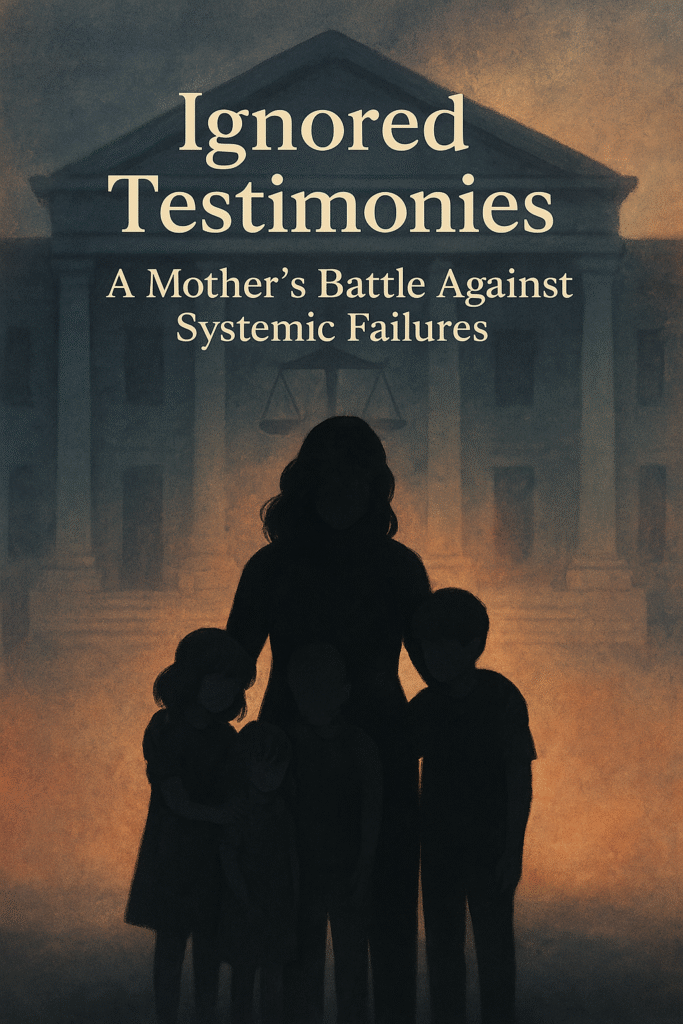
Ignored Testimonies: A Mother’s Battle Against Systemic Failures in Family Court

Clara’s Story:

Ignored Testimonies: A Mothers Battle Against Systemic  Failures

A Mother’s Fear and a Court Report That Changed Everything

Clara Mitchell had long feared for the safety of her children. Over several years, she had been entangled in family court proceedings in which a court-commissioned family report would play a pivotal role. The report had been prepared by Dr. Fiona Hart, a single expert witness commissioned by the parties, rather than the Court itself.

While the Court clarified that it could not investigate complaints about externally commissioned reports, Clara and her children felt that Dr. Hart had failed in her professional duty, putting them at grave risk.

Children Left Unprotected by a Report That Ignored Abuse

The Mitchell children—Emma, Lucas, Lily, Chloe, and Rose—had all been affected by decisions made based on Dr. Hart’s report. Clara had tried to voice concerns during the proceedings, but legal constraints and timing issues left her unable to challenge the omissions directly. The family feared that the children’s lived experiences of abuse would be systematically ignored.

Severe Allegations Against Damien Carter

The allegations against Damien Carter, the children’s father, were severe. Clara described incidents of sexual abuse, physical and emotional violence, coercion, and grooming.

She recounted that Damien had forced his children into dangerous and humiliating acts, inflicted harm on family pets, and controlled the children through manipulation and threats. Despite disclosing these traumas directly to Dr. Hart during multiple interviews, Clara and her children later discovered that none of this information had been included in the family report.

Emma’s Story: A Glimpse of Hope, Followed by Betrayal

Emma Mitchell, the eldest daughter, provided a detailed account of her experience. She described a session with Dr. Hart in which she and Lucas had relived years of trauma at the hands of Damien.

Emma recalled that Dr. Hart had expressed astonishment that the children had not previously been interviewed, giving the siblings a brief sense of hope that someone was finally listening. Yet, when the report was filed, none of the children’s disclosures—ranging from sexual abuse and drug-related incidents to threats of violence—were reflected.

Emma emphasized the profound betrayal this caused, leaving her and her siblings feeling disregarded and unprotected.

Lucas’s Evidence: Recordings Ignored

Lucas Mitchell echoed his sister’s concerns. He explained how he had recorded the sessions with Dr. Hart to ensure the children’s testimony was preserved, given the risk that it would be omitted.

He described the same frustration: critical evidence, including a recorded phone call in which Damien coached one of the younger children on what to say to Dr. Hart, was ignored in the final report.

Lucas worried that the omissions would lead the court to issue orders placing the children with an abusive parent, heightening the risk to their safety.

The Consequences of a Flawed Report

Clara described the ongoing distress caused by the report’s omissions. She recounted how the Court’s decisions had led to situations where her children were forced to remain with their father despite the documented risks.

The children had, in some cases, self-placed or run away to avoid further harm. Clara noted that the failure to include the children’s disclosures in Dr. Hart’s report left the family vulnerable and allowed the abuse to continue unchecked.

Emotional Fallout and Reclaiming Power

Clara also reflected privately on the emotional toll this entire ordeal had taken on her. She recognized that she had carried the weight of trauma not only for herself but for her children.

Each session with Dr. Hart had required her and her children to revisit memories they had struggled to suppress, and yet those revelations had seemingly vanished into the pages of a report.

Clara understood that processing this grief required acknowledging the pain without allowing it to define her or her children. She sought small ways to reclaim a sense of control: journaling her experiences, documenting the timeline of events, and setting boundaries with those who sought to minimize her children’s voices.

A Mother’s Quiet Resistance and Acts of Protection

She reminded herself that her role was not to carry the Court’s failures but to advocate for her children’s healing. Clara realized that even when systems failed, her validation of the children’s experiences—listening, believing, and affirming them—was a profound act of protection and resilience.

In private moments, she encouraged her children to express themselves safely, to reclaim autonomy over their stories, and to know that the injustices they had endured were not a reflection of their worth.

Finding Strength in Solidarity

Clara also sought strength in community. She reached out to other mothers who had faced similar challenges, learning from their experiences and finding solidarity.

Sharing the story, even in fragments, became a way of transforming helplessness into action. Clara recognized that while she could not erase the past, she could create a space for truth, safety, and recovery.

The Larger Problem: When Reports Ignore Children

Ultimately, the Mitchell family’s experience highlighted the vulnerabilities of children in family law proceedings when critical testimony is excluded from professional reports.

Despite the Court’s administrative limitations, Clara sought to raise awareness through formal complaints to professional bodies and recorded documentation.

Her story illustrates the tension between legal processes, professional obligations, and the real-world protection of children at risk. It also offers a lesson in resilience: even in the face of systemic failure, the acts of listening, documenting, and believing are powerful tools of healing.

Thank you for subscribing. New reflections are shared occasionally, and you’ll be notified when they’re published.

Subscription Form

Link to a – National Domestic Violence Hotline